
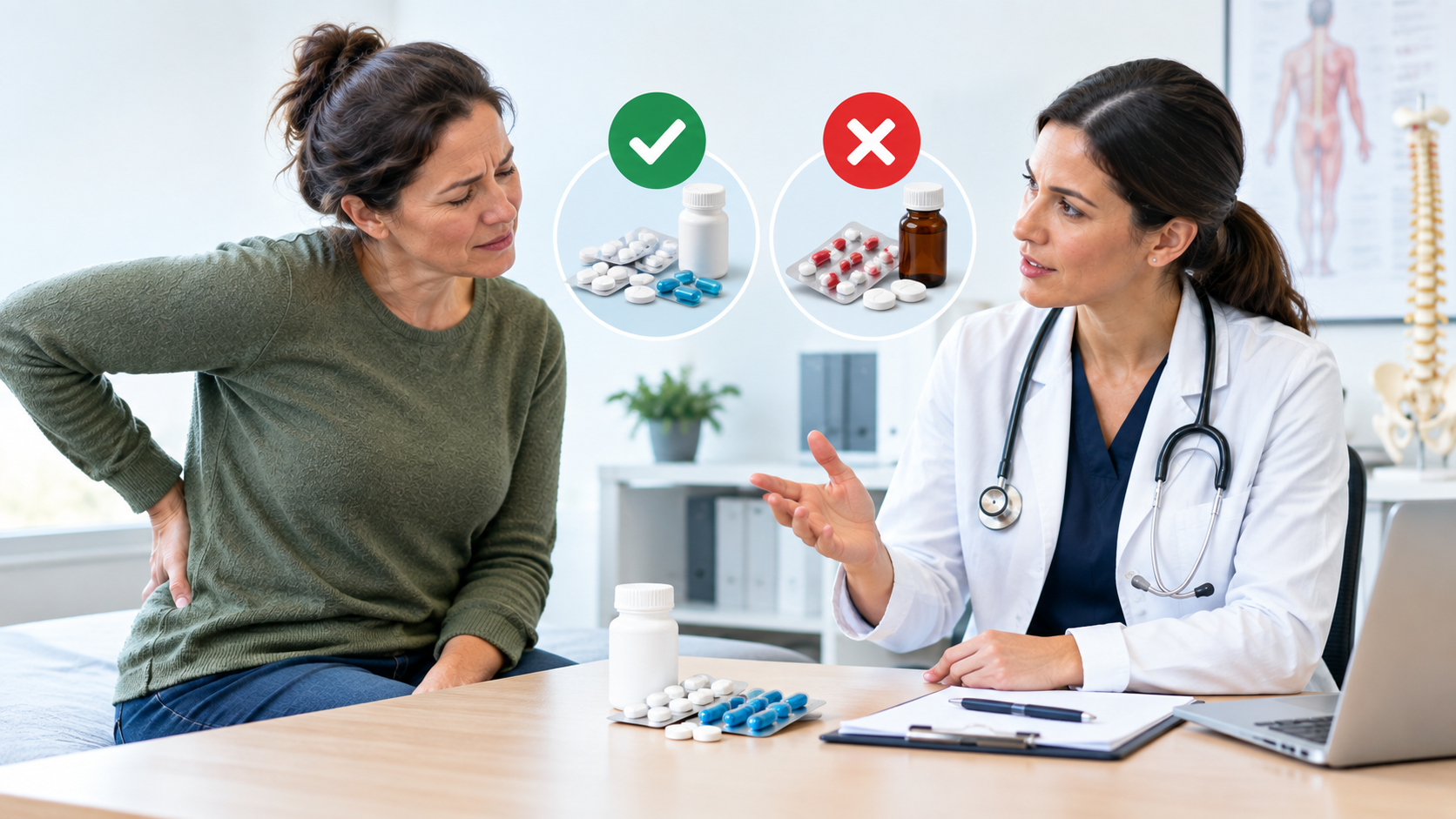
Back pain is one of the most common reasons people look for pain-relief options, but there is no single medication that is right for everyone.
The appropriate treatment depends on the cause of the pain, how long it has been present, how severe it is, whether symptoms travel into the legs, and whether other medical conditions or medications affect treatment choices.
For many people with uncomplicated low back pain, treatment may include staying appropriately active, heat, exercise or physical therapy, and—when medically appropriate—a nonsteroidal anti-inflammatory drug (NSAID). Other medications may be considered for specific situations, but prescription treatment should be based on an individualized assessment.
This guide explains back pain medication options, including over-the-counter medicines, selected prescription treatments, medications that are not routinely recommended, opioid safety, treatment for sciatica, non-drug approaches, and warning signs that require medical attention.
Last medically reviewed: September 2026
Medical information notice: This article is for educational purposes and does not replace individualized medical advice, diagnosis, or treatment. Do not start, stop, combine, or change prescription medication without speaking with a qualified healthcare professional.
Quick Answer: What Is the Best Medication for Back Pain?
There is no universally best medication for back pain.
For uncomplicated low back pain, an NSAID such as ibuprofen or naproxen may help some adults when there are no contraindications. NSAIDs can have important gastrointestinal, kidney, cardiovascular, and other risks, so they should be used appropriately and for the shortest reasonable duration.
Acetaminophen is commonly used as a general pain reliever, but evidence does not support it as an effective treatment for uncomplicated low back pain when used alone.
For selected patients with chronic low back pain, some guidelines support considering medications such as duloxetine. However, clinical guidelines differ in their recommendations, so treatment should be individualized.
Muscle relaxants may sometimes be considered for acute low back pain, particularly when muscle spasm is involved, but they can cause drowsiness and other adverse effects.
Opioids are generally not first-line treatment for uncomplicated low back pain. The CDC recommends maximizing nonpharmacologic and nonopioid treatments and considering opioids for acute pain only when expected benefits outweigh risks. back pain medication
Table of Contents

What Causes Back Pain?
Back pain can result from many different conditions.
Common causes include:
- Muscle or ligament strain
- Repetitive lifting
- Physical overexertion
- Prolonged inactivity
- Poor movement patterns
- Age-related spinal changes
- Arthritis
- Disc-related problems
- Nerve irritation
- Sciatica
- Spinal stenosis
- Injuries
Some back pain has no single identifiable structural cause.
Less commonly, back pain can be associated with conditions requiring urgent medical attention, including significant neurological compression, infection, fracture, or cancer.
For that reason, treatment should not focus only on suppressing pain. The underlying cause and the person’s overall health should also be considered.
A healthcare professional may assess:
- Where the pain is located
- When it started
- Whether it followed an injury
- Whether it travels into the leg
- Whether there is numbness or weakness
- Whether bowel or bladder symptoms are present
- Previous medical conditions
- Current medications
- Other risk factors
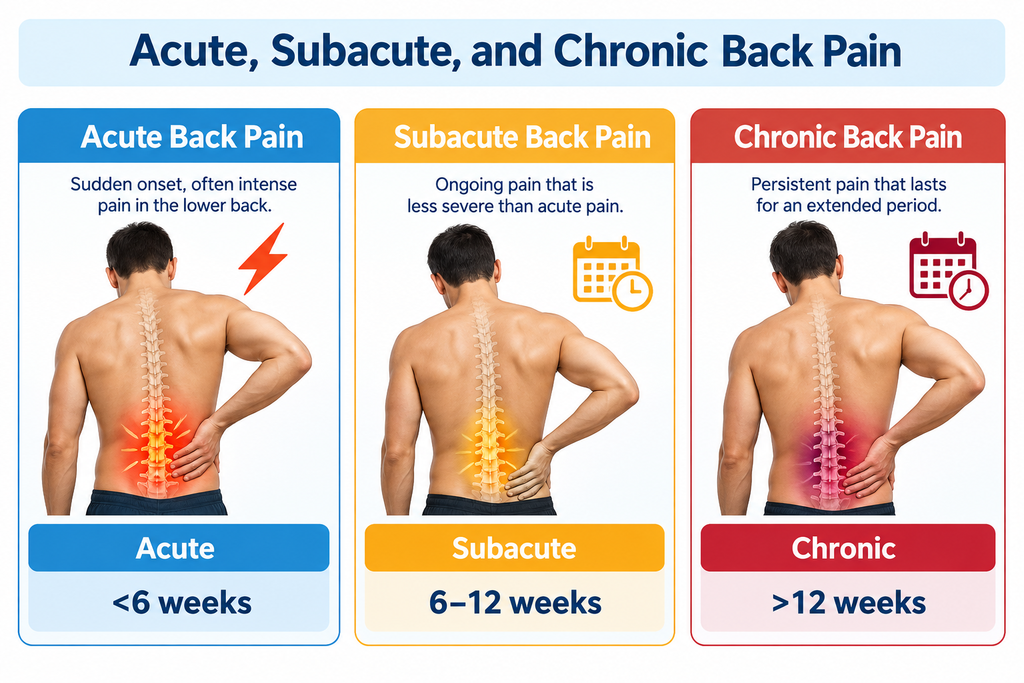
Acute, Subacute, and Chronic Back Pain
The duration of symptoms can influence the appropriate treatment approach.
Acute Back Pain
Acute back pain develops suddenly or has been present for a relatively short period.
Many uncomplicated episodes improve with conservative treatment.
Depending on the individual, treatment may include:
- Staying gently active
- Avoiding prolonged bed rest
- Heat
- Appropriate exercise
- Physical therapy
- An NSAID when medically appropriate
Medication is not always necessary.
The CDC notes that nonpharmacologic treatments such as heat and exercise can have a role in acute pain management, and that nonopioid therapies are at least as effective as opioids for many common acute pain conditions, including low back pain.
Subacute Back Pain
Subacute pain generally refers to pain that continues beyond the acute period but has not persisted for more than several months.
Persistent symptoms deserve reassessment rather than simply escalating medication.
A healthcare professional may review the diagnosis, treatment response, physical activity, sleep, medications, and other factors that could be contributing to ongoing symptoms.
Chronic Back Pain
Chronic back pain lasts for months and can affect sleep, mobility, work, mood, and quality of life.
Treatment often requires more than pain medicine.
Depending on the underlying condition, a treatment plan may include:
- Exercise
- Physical therapy
- Behavioral approaches
- Sleep management
- Weight management when appropriate
- Ergonomic changes
- Treatment of an underlying condition
- Selected medications
The goal is not simply to reduce a pain score. Improving function and quality of life is also important. lower back pain medication
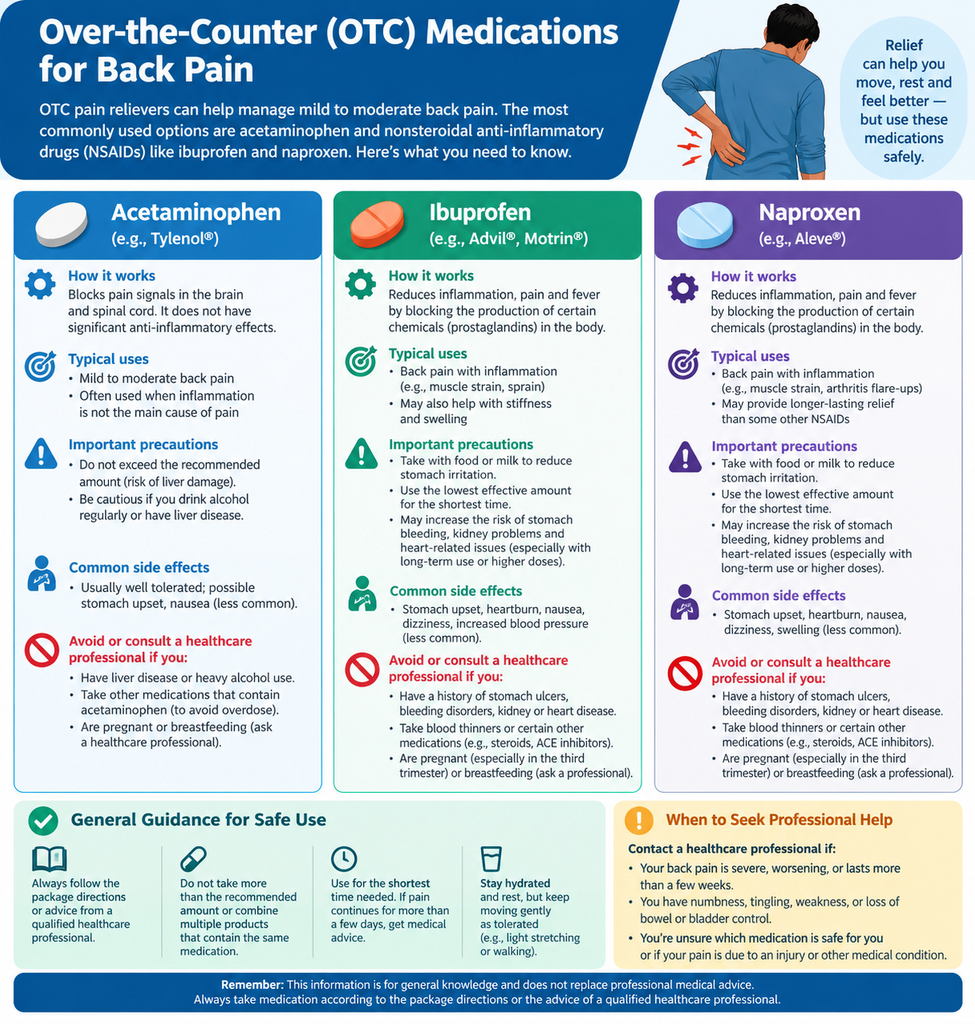
Over-the-Counter Medications for Back Pain
Over-the-counter medications are often the first medicines people consider when back pain develops.
However, nonprescription does not mean risk-free.
The choice should take into account other medical conditions, current medications, age, pregnancy status, and how long the medication is expected to be used.
Ibuprofen
Ibuprofen is a nonsteroidal anti-inflammatory drug, commonly called an NSAID.
NSAIDs can reduce pain and inflammation and may help some people with low back pain.
Ibuprofen is not appropriate for everyone.
Potential risks include:
- Stomach irritation
- Ulcers
- Gastrointestinal bleeding
- Kidney problems
- Fluid retention
- Increased blood pressure
- Cardiovascular risks in susceptible people
- Drug interactions
People with kidney disease, certain cardiovascular conditions, a history of gastrointestinal bleeding, or other risk factors should discuss NSAID use with a healthcare professional.
Related guide: [Ibuprofen for Back Pain]
Naproxen
Naproxen is another NSAID used for pain and inflammation.
Like ibuprofen, it can be useful for some people but carries potential gastrointestinal, kidney, cardiovascular, and other risks.
The question is not simply whether naproxen is “stronger” than another pain reliever.
The appropriate medication depends on the individual’s medical history, other medications, treatment goals, and risk factors.
Related guide: [Naproxen for Back Pain]
Acetaminophen
Acetaminophen is widely used as a general pain reliever.
However, evidence reviewed in clinical guidelines does not support acetaminophen as an effective treatment for uncomplicated low back pain when used alone.
NICE specifically recommends against offering paracetamol alone for low back pain.
Acetaminophen also carries an important liver-safety warning.
Taking excessive amounts, or accidentally combining several products that contain acetaminophen, can cause serious liver injury.
Always check active ingredients on combination products.
Related guide: [Acetaminophen for Back Pain]
Topical Pain Medicines
Topical medications are applied to the skin rather than taken orally.
Depending on the product, topical treatments may contain ingredients such as:
- Diclofenac
- Lidocaine
- Capsaicin
- Other local pain-relieving ingredients
Their usefulness depends on the specific product and the underlying pain condition.
A topical product should not automatically be assumed to treat every type of back pain.
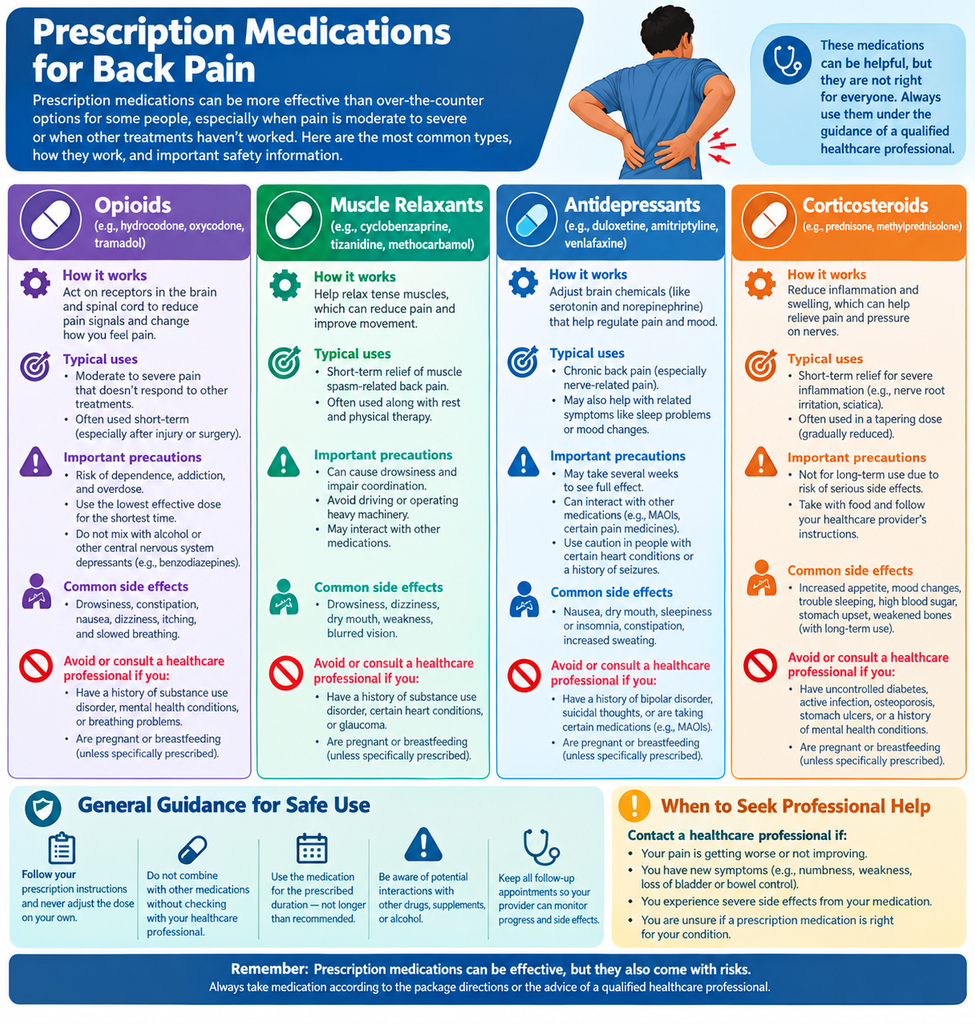
Prescription Medications for Back Pain
Prescription medication may be considered when symptoms are severe, persistent, associated with a specific diagnosis, or inadequately controlled with conservative measures.
The appropriate medication depends on the diagnosis and individual risk factors.
Muscle Relaxants
Muscle relaxants may sometimes be considered for acute low back pain.
They may be particularly relevant when muscle spasm is contributing to symptoms.
However, these medicines can cause:
- Drowsiness
- Dizziness
- Reduced alertness
- Impaired coordination
These effects can make driving or operating machinery unsafe.
Combining sedating medicines can increase risk.
Anyone taking a muscle relaxant should discuss other medications, alcohol use, and other sedating substances with a healthcare professional.
The CDC notes that ACP recommends NSAIDs or skeletal muscle relaxants when pharmacologic treatment is desired for acute low back pain.
Related guide: [Muscle Relaxers for Back Pain]
Duloxetine
Duloxetine belongs to a class of medicines called serotonin-norepinephrine reuptake inhibitors, or SNRIs.
It is used for several conditions, including certain chronic pain conditions.
The VA/DoD guideline suggests duloxetine for chronic low back pain, although the recommendation is not strong and adverse effects must be considered.
Other guidelines take different positions. NICE does not recommend SNRIs for managing low back pain.
This difference illustrates why there is no universal medication algorithm for every patient.
Potential adverse effects of duloxetine may include:
- Nausea
- Dry mouth
- Constipation
- Fatigue
- Sleep changes
- Other medication-specific effects
Duloxetine should be used only when a healthcare professional determines that the potential benefits outweigh the risks.
Related guide: [Duloxetine for Chronic Back Pain]
Gabapentin and Pregabalin
Gabapentin and pregabalin are medicines used for certain neurological conditions and types of nerve pain.
They are sometimes discussed in relation to back pain because some people experience nerve-related symptoms such as:
- Burning
- Tingling
- Electric-shock sensations
- Numbness
- Pain traveling down a leg
However, the presence of nerve symptoms does not automatically mean that gabapentin or pregabalin will help.
NICE recommends against gabapentinoids for low back pain and against gabapentinoids for sciatica because evidence has not demonstrated overall benefit and there is evidence of harm.
These medicines can also cause dizziness and sleepiness.
Other Prescription Pain Medicines
Other prescription medicines may be considered for particular diagnoses or circumstances.
There is no responsible universal list of “strongest” back pain medicines because medication choice depends on:
- Diagnosis
- Severity
- Duration
- Age
- Kidney and liver function
- Other medications
- Previous treatment
- Risk of adverse effects
- Risk of dependence or misuse
A medicine that is appropriate for one person may be inappropriate for another.
What About Opioids for Back Pain?
Opioids include medicines such as oxycodone, hydrocodone, morphine, codeine, and hydromorphone.
They can have an important role in some forms of severe pain, but they are not generally first-line treatment for uncomplicated low back pain.
The CDC states that nonopioid therapies are at least as effective as opioids for many common acute pain conditions, including low back pain. The guideline recommends maximizing nonpharmacologic and nonopioid treatments and considering opioids for acute pain only when expected benefits outweigh risks.
Why Opioids Are Not Usually First-Line Treatment
Potential opioid risks include:
- Sedation
- Dizziness
- Respiratory depression
- Constipation
- Physical dependence
- Opioid use disorder
- Overdose
- Drug interactions
- Unintentional long-term use
The CDC also emphasizes that opioid therapy for subacute and chronic pain should only be considered when expected benefits for pain and function outweigh risks.
NICE recommends against opioids for chronic low back pain and recommends that opioids not routinely be offered for acute low back pain.
When Might an Opioid Be Considered?
There are situations in which a clinician may determine that opioid treatment is appropriate.
For example, severe acute pain following significant trauma or surgery may sometimes require opioid medication.
The decision should be individualized.
If opioids are prescribed for acute pain, the CDC recommends using the lowest effective dose and no greater quantity than needed for the expected duration of pain severe enough to require them.
This is different from saying that everyone with severe back pain needs an opioid.
What About Steroids for Back Pain?
Systemic corticosteroids are sometimes discussed for back pain, particularly when nerve-related symptoms are present.
However, they are not routine treatment for uncomplicated low back pain.
NICE specifically recommends against oral corticosteroids for sciatica because evidence does not show overall benefit and there is evidence of harm.
Steroids can have significant adverse effects, particularly when used repeatedly or for longer periods.
Whether a steroid has a role depends on the specific diagnosis and clinical circumstances.
Medication for Sciatica
Sciatica is different from uncomplicated mechanical low back pain.
Sciatica generally involves irritation or compression affecting a nerve root and may produce symptoms extending from the lower back through the buttock and into the leg.
Possible symptoms include:
- Shooting pain
- Burning
- Tingling
- Numbness
- Weakness
Medication should not be selected solely because the pain travels down the leg.
NICE recommends against gabapentinoids, other antiepileptic medicines, oral corticosteroids, and benzodiazepines for sciatica because there is no overall evidence of benefit and there is evidence of harm.
NICE also notes limited evidence of benefit from NSAIDs for sciatica and recommends consideration of their potential harms.
Related guide: [Medication for Sciatica]
People with significant or worsening weakness, new bladder or bowel problems, or numbness around the groin or inner thighs require urgent medical assessment.
Medication for Chronic Back Pain
Chronic back pain often requires a broader treatment strategy.
Medication can sometimes play a role, but long-term reliance on pain medicine without addressing contributing factors may not provide the best outcome.
Treatment may include:
- Exercise therapy
- Physical therapy
- Behavioral approaches
- Sleep improvement
- Weight management when appropriate
- Workplace or ergonomic modifications
- Treatment of an underlying condition
- Selected medications
The VA/DoD guideline provides evidence-based recommendations for diagnosis and management of low back pain and emphasizes individualized clinical decision-making.
The CDC likewise recommends maximizing nonpharmacologic and nonopioid approaches for subacute and chronic pain before considering opioid therapy.
Related guide: [Chronic Back Pain Treatment]
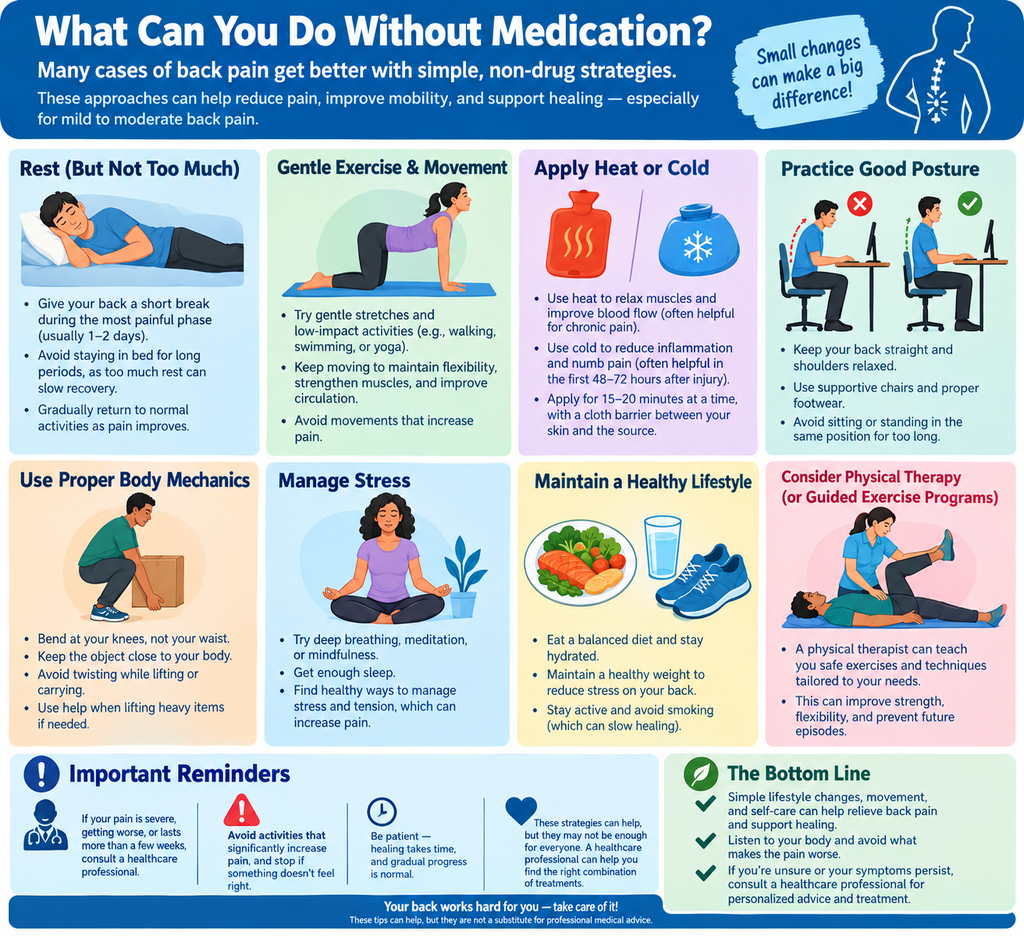
What Can You Do Without Medication?
Medication is only one part of back pain management.
Stay Active When Possible
For uncomplicated back pain, prolonged bed rest is generally not the goal.
Appropriate movement can help maintain function and may support recovery.
Activity should be adjusted to the individual’s symptoms and diagnosis.
Heat
Heat may provide short-term relief for some people with acute low back pain.
A heating pad, warm compress, or other safe heat source may be used according to product instructions.
Avoid excessive heat or prolonged direct skin exposure that could cause burns.
Physical Therapy
Physical therapy can help some people improve:
- Strength
- Mobility
- Flexibility
- Movement patterns
- Physical function
A physical therapist can develop a program based on the individual’s condition and functional limitations.
Exercise
Exercise programs can vary considerably.
Depending on the person’s condition, a healthcare professional may recommend:
- Walking
- Strengthening exercises
- Mobility exercises
- Stretching
- Aquatic exercise
- Other structured movement
There is no single exercise program that works for every type of back pain.
Psychological and Behavioral Approaches
Persistent pain can affect mood, sleep, activity levels, and quality of life.
For some people with chronic low back pain, psychological approaches such as cognitive behavioral therapy can form part of a broader treatment program.
These approaches do not mean that the pain is imaginary.
They address the relationship between persistent pain, behavior, sleep, stress, and daily function.
How to Use Back Pain Medication More Safely
If a healthcare professional recommends medication, several principles can reduce avoidable risks.
1. Follow the directions
Do not increase a dose simply because the initial dose did not provide enough relief.
2. Check active ingredients
Some combination cold, flu, sleep, and pain products contain the same active ingredients.
Accidentally combining products can result in excessive exposure.
3. Tell your healthcare professional about other medicines
Interactions can affect:
- Bleeding risk
- Kidney function
- Liver function
- Blood pressure
- Sedation
- Breathing
Provide a complete list of prescription medicines, OTC products, and supplements.
4. Be cautious with alcohol
Alcohol can increase the risks associated with several medications, particularly medicines that cause sedation.
The combination of alcohol with opioids or other central nervous system depressants can be particularly dangerous.
5. Do not share prescription medication
A medication prescribed for one person may be inappropriate or dangerous for someone else.
6. Reassess persistent pain
If you repeatedly need medication because your back pain is not improving, the answer may not be a stronger painkiller.
You may need another clinical evaluation.
Who Should Be Especially Careful With Back Pain Medicines?
Medication decisions may require additional caution if you:
- Are pregnant or breastfeeding
- Are an older adult
- Have kidney disease
- Have liver disease
- Have a history of ulcers or gastrointestinal bleeding
- Have cardiovascular disease
- Take blood thinners
- Take several prescription medicines
- Take sedating medicines
- Have sleep apnea
- Have a history of substance use disorder
- Have experienced medication-related adverse effects previously
Do not assume that a medicine is safe simply because it is available without a prescription.
When Is Back Pain an Emergency?
Some symptoms require urgent medical attention rather than another dose of pain medicine.
Seek urgent medical care if back pain is accompanied by:
- New loss of bladder control
- New loss of bowel control
- Numbness around the groin or inner thighs
- Significant or rapidly worsening weakness in the legs
- Severe neurological symptoms
- Severe pain after major trauma
- Fever with severe back pain when infection is a concern
- Rapidly worsening symptoms
These symptoms can sometimes indicate serious neurological, infectious, traumatic, or other conditions.
When Should You See a Doctor for Back Pain?
Consider making a medical appointment if:
- Pain persists or repeatedly returns
- Pain interferes with sleep
- Pain interferes with work or daily activities
- Pain travels into a leg
- You develop persistent numbness
- You develop weakness
- Symptoms are worsening
- Home treatment is not helping
- You repeatedly need pain medication
- Medication is causing troublesome side effects
- You are uncertain about the cause of the pain
Persistent pain deserves evaluation rather than indefinite self-treatment.
Related guide: [When Should You See a Doctor for Back Pain?]
Frequently Asked Questions About Back Pain Medication
What is the best medicine for back pain?
There is no single best medicine for everyone. NSAIDs such as ibuprofen or naproxen may help some people with low back pain when medically appropriate. The best treatment depends on the cause of pain, medical history, other medications, and individual risk factors.
Is ibuprofen good for lower back pain?
Ibuprofen is an NSAID that can reduce pain and inflammation and may help some people with low back pain. However, it can cause gastrointestinal, kidney, cardiovascular, and other adverse effects and is not appropriate for everyone.
Is naproxen better than ibuprofen for back pain?
Neither is universally better. Both are NSAIDs, and the appropriate choice depends on the person’s medical history, other medications, treatment duration, risk factors, and response.
Does acetaminophen work for back pain?
Evidence reviewed by major guidelines does not support acetaminophen as an effective treatment for uncomplicated low back pain when used alone. NICE specifically recommends against offering paracetamol alone for low back pain.
What is the best prescription medication for chronic back pain?
There is no universally best prescription medicine. Depending on the diagnosis and individual circumstances, a clinician may consider options such as duloxetine or an NSAID alongside non-drug treatment. Guideline recommendations differ, so treatment should be individualized.
Are muscle relaxers good for back pain?
Muscle relaxants may sometimes be considered for acute low back pain, particularly when muscle spasm is present. They can cause drowsiness, dizziness, and impaired coordination.
Does gabapentin help back pain?
Gabapentin is used for certain neurological conditions, but it is not routinely recommended for ordinary low back pain. NICE recommends against gabapentinoids for low back pain and sciatica because evidence has not shown overall benefit and there is evidence of harm.
Are opioids recommended for back pain?
Opioids are not first-line treatment for most uncomplicated low back pain. The CDC recommends maximizing nonopioid and nonpharmacologic treatments and considering opioids for acute pain only when expected benefits outweigh risks.
Can back pain go away without medication?
Yes. Many uncomplicated episodes improve with conservative treatment, including appropriate activity, heat, exercise, and other non-drug approaches. The appropriate treatment depends on the underlying cause.
How long does back pain usually last?
Many uncomplicated episodes improve over several weeks, but persistent, worsening, recurrent, or neurologically complicated pain should be evaluated rather than treated indefinitely with self-directed medication.
The Bottom Line
The strongest medication is not automatically the best treatment for back pain.
For many people with uncomplicated low back pain, appropriate activity, heat, exercise, physical therapy, and—when medically appropriate—an NSAID may be part of an effective treatment plan.
Other medications may have a role for selected patients, but their benefits and risks need to be considered individually.
Acetaminophen should not automatically be assumed to treat low back pain effectively, and medicines such as gabapentin or pregabalin should not automatically be used simply because someone experiences pain extending into the leg.
Opioids should not be treated as the default solution for severe back pain. The CDC recommends maximizing nonopioid and nonpharmacologic treatments and using opioids only when the expected benefits outweigh the risks.
If back pain persists, repeatedly returns, worsens, interferes with normal activities, or is accompanied by neurological warning signs, the next step may be a medical evaluation rather than a stronger painkiller.
Medical Review & Editorial Standards
Written By
Dr Charlotte Mitchell
Founder & Publisher
This article is intended to provide accessible educational information about back pain, medication options, treatment considerations, and patient safety.
Medical claims involving prescription medicines should be reviewed against current clinical guidelines and high-quality medical literature.
Medically Reviewed By
[Insert verified healthcare professional]
[Credentials and specialty]
The medical reviewer should verify medication information, safety statements, contraindications, evidence claims, and guideline references before publication.
Last medically reviewed: September 2026
Only publish a clinician’s name, credentials, license information, affiliations, or professional history if those details are genuine and independently verifiable.
Editorial Policy
Our medical-information content is developed using authoritative clinical guidelines, government health resources, professional medical organizations, and peer-reviewed evidence where appropriate.
Medical information is reviewed periodically because recommendations and evidence can change.
If a material error is identified, the content should be corrected and the revision date updated.
Evidence-Based Sources
Centers for Disease Control and Prevention
The CDC’s 2022 Clinical Practice Guideline addresses acute, subacute, and chronic pain and emphasizes nonpharmacologic and nonopioid approaches. It specifically identifies low back pain among acute pain conditions for which nonopioid therapies can be at least as effective as opioids.
U.S. Department of Veterans Affairs / Department of Defense
The VA/DoD Clinical Practice Guideline for Low Back Pain provides evidence-based recommendations for evaluation and management of low back pain.
NICE
NICE Guideline NG59 provides recommendations for low back pain and sciatica, including medication safety and recommendations concerning NSAIDs, opioids, gabapentinoids, corticosteroids, and paracetamol.
Related Back Pain Resources
For a complete topical cluster, see:
- Best OTC Medications for Back Pain
- Ibuprofen for Back Pain
- Naproxen for Back Pain
- Acetaminophen for Back Pain
- Muscle Relaxers for Back Pain
- Duloxetine for Chronic Back Pain
- Medication for Sciatica
- Chronic Back Pain Treatment
- Acute vs. Chronic Back Pain
- Non-Medication Treatments for Back Pain
- When Should You See a Doctor for Back Pain?
- Back Pain Red Flags
🚨 Emergency Warning: Get Urgent Medical Care
Do not wait for a routine appointment if back pain occurs with any of the following:
- New loss of bladder or bowel control
- Difficulty starting urination or inability to urinate
- New numbness around the groin, genitals, buttocks, or inner thighs (“saddle numbness”)
- Severe or rapidly worsening weakness in one or both legs
- Rapidly worsening neurological symptoms
- Severe back pain after major trauma, especially if a spinal injury may have occurred
These symptoms can indicate a serious neurological or spinal problem that requires prompt medical assessment.
If these symptoms are severe or rapidly developing, seek emergency medical care rather than trying to manage the condition at home.
Important: Most back pain is not an emergency. This warning applies to specific symptoms that can signal a potentially serious problem.

